How to prepare your Newhall home for wildfire season
Wildfire season in Newhall runs May through October, but the work that saves homes happens in winter and spring. Here is the room-by-room, yard-by-yard checklist we give homeowners.
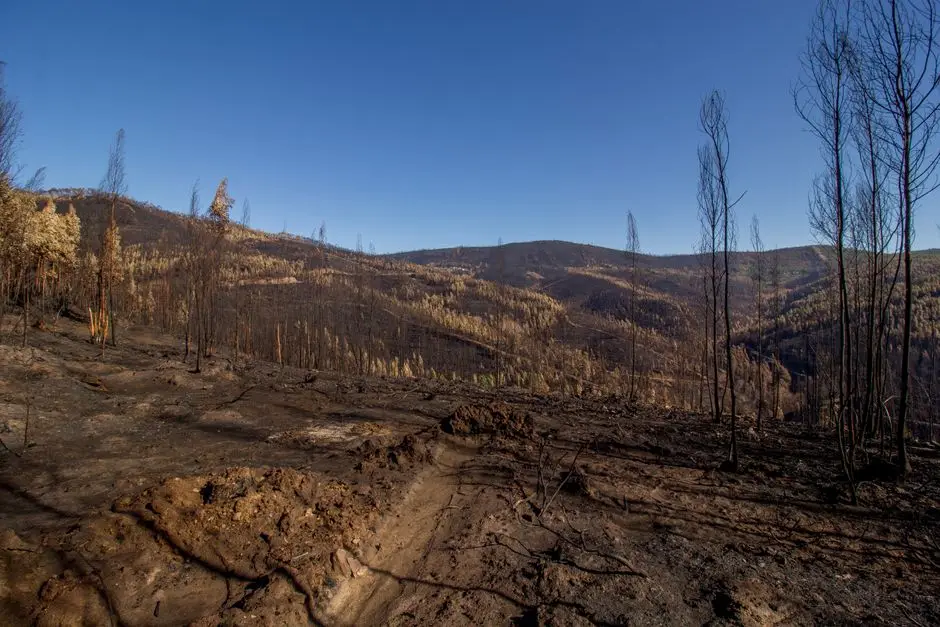
Preparing your Newhall home for wildfire season means clearing defensible space in three bands out to 100 feet, hardening the structure against embers, and keeping the first five feet around the foundation non-combustible. Wildfire season in Newhall runs May through October, but the work that actually saves homes happens between November and April, before the Santa Ana winds arrive. This guide walks through the zones, the costs, and the mistakes we see on properties across the Santa Clarita Valley.
How to prepare your Newhall home for wildfire season in California is a category of work that combines vegetation management, home hardening, and emergency planning. It is not one task. It is a set of tasks you repeat every year, and the order matters more than the effort.
We are Fire Damage Restoration Newhall, and we spend most of our year cleaning up after fires that started as ember intrusions. That experience shapes what we tell homeowners to do before the next one. If you want the short version: start at the house, work outward, and do not skip the first five feet.
When is wildfire season in Newhall, California?
Wildfire season in Newhall, California runs from May through October, with the highest risk window between September and November when Santa Ana winds push through the Newhall Pass at 40 to 70 mph. The season is longer than most residents assume. Cal Fire treats the entire state as fire-prone year-round, and in the Santa Clarita Valley we have seen red flag warnings in December and January after dry winters.
What that means practically: you cannot wait until June to start. The brush that carries fire up the hillsides behind Placerita Canyon and Happy Valley dries out by April. By the time the first red flag warning hits, the fuel load is already set. The homeowners who come through fire season with a house intact are the ones who cleared brush in February and March.
We tell people to treat November through April as the preparation window and May through October as the maintenance window. That is the rhythm that works in this valley.
Why Newhall homes face a specific wildfire risk
Newhall homes face a specific wildfire risk because the community sits at the junction of three wind corridors, and the wildland-urban interface runs directly against residential streets in Placerita Canyon, Happy Valley, and the Sierra Highway Corridor. The Newhall Pass funnels wind. That is not a metaphor. The pass is a topographic gap in the San Gabriel Mountains, and when pressure gradients set up, air accelerates through it the way water accelerates through a narrow pipe.
Embers from a fire in Angeles National Forest can land on a roof in Downtown Newhall in under ten minutes under those conditions. Most homes that burn in wildland fires are ignited by embers, not by a flame front reaching the wall. Embers land in gutters, on woodpiles, on patio furniture cushions, and inside attic vents. They smolder for 20 to 45 minutes before they show flame.
That is why the preparation work focuses on the house first. Clearing brush 100 feet out does not help if an ember enters a vent and ignites the insulation in your attic. We respond to more attic fires than any other single type in this area, and most of them start with an ember that got past a vent screen.
Older neighborhoods carry extra risk. Homes in Newhall Old Town and the William S. Hart Park Area were built before modern fire-resistant construction standards, and many still have wood-shake roofs, single-pane windows, and open-eave construction. Those features are beautiful and they are also ember traps. If you own one of these homes, the hardening work matters more than the brush clearing.
How to prepare your Newhall home for wildfire season in California: the five zones
How to prepare your Newhall home for wildfire season in California comes down to five zones, and the work in each zone is different. We use this framework on every property we assess because it keeps homeowners from spending money in the wrong order.
Zone 0: the first five feet around the foundation
Zone 0 is the five feet immediately around your foundation, and it must be non-combustible. No bark mulch. No wood fence attached to the house. No shrubs against the wall. No firewood stacked under the eaves. Replace mulch with gravel, river rock, or concrete. If you have a wood fence that meets the house, replace the last five feet with a metal gate or a non-combustible panel.
This is the single highest-return change you can make. Embers accumulate in mulch beds and smolder for hours. We have seen foundations char from a mulch fire that started 30 feet away and crept along the bed.
Zone 1: five to thirty feet
Zone 1 runs from five to thirty feet out. Keep lawns mowed to 4 inches or less. Keep trees and shrubs in separated islands, not continuous hedges. Remove lower branches on trees up to 6 feet from the ground so a ground fire cannot climb into the canopy. Keep patio furniture cushions inside when red flag warnings are active.
If you have a woodpile, move it to Zone 2 or beyond. A cord of firewood holds enough energy to ignite a house if it catches while the wind is pushing toward the structure.
Zone 2: thirty to one hundred feet
Zone 2 is the defensible space band most people picture when they hear the term. Reduce brush to isolated clumps, keep grass under 4 inches, and remove dead vegetation entirely. Space shrubs at least twice their mature height apart. On slopes, extend the spacing because fire moves faster uphill.
If your property backs up to open space in Placerita Canyon or Happy Valley, this is where the bulk of your annual labor goes. It is also where we see homeowners get quoted the widest range of prices, because the work varies enormously by slope and fuel type.
Zone 3: the structure itself
Zone 3 is the house. Install 1/8-inch or finer metal mesh on all attic and foundation vents. Replace plastic vent screens, which melt at 200 to 300 degrees Fahrenheit. Upgrade single-pane windows to dual-pane tempered glass on the side of the house facing the prevailing wind. Enclose the eaves. Class A roofing is required on new construction in California, and if you have a wood-shake roof, replacement is the single biggest risk reduction available to you.
We handle the cleanup and restoration side of fire damage, and we can walk your property and tell you what we would fix first. For homeowners who want the full assessment, our Fire Damage Restoration team covers Newhall and the surrounding valley.
Zone 4: the emergency plan
Zone 4 is the plan you make before you need it. Know two evacuation routes out of your neighborhood. Register for Alert LA County. Pack a go-bag with medications, documents, chargers, and three days of clothing. Photograph every room of your house for insurance purposes, and store those photos in the cloud.
If you rent, your preparation is different. You cannot replace the roof, but you can clear your patio, keep the balcony free of combustibles, and know your building's evacuation plan. Our tenant fire damage cleanup team works with renters across the valley on exactly this kind of pre-loss documentation.
What does wildfire home preparation cost in Newhall in 2026?
Wildfire home preparation in Newhall in 2026 typically runs $1,200 to $4,500 for a full defensible space clearing on a standard quarter-acre lot, and $800 to $3,000 for home hardening work on top of that. The range is wide because the variables are wide: slope, fuel density, access, and how much of the work you do yourself.
Here is how the numbers break down in this area:
- Defensible space clearing (Zones 1 and 2), quarter-acre lot: $1,200 to $3,500. Steep lots in Placerita Canyon run toward the top of that range.
- Vent screening, all attic and foundation vents: $300 to $900.
- Gutter cleaning and debris removal: $200 to $500 per visit, and you need it twice a year.
- Zone 0 conversion (mulch to gravel, fence gap): $400 to $1,800 depending on linear footage.
- Tree limbing and removal of dead trees: $600 to $2,500 per tree, more if access is difficult.
You can do most of this yourself. The labor is real but the tools are basic: a string trimmer, a pole saw, a rake, and a lot of trips to the green waste bin. What most homeowners cannot do safely is the tree work and the roof-level vent work. That is where a professional crew earns its cost.
If you want a professional assessment before you spend anything, our Fire Damage Restoration Near Me in NEWHALL, California service includes a walkthrough that tells you what to prioritize. We would rather you spend $1,500 in the right places than $4,000 in the wrong ones.
Common mistakes we see on Newhall properties
Common mistakes on Newhall properties usually involve doing the visible work and skipping the invisible work. Homeowners clear brush because they can see it. They skip vent screening because they cannot. Then an ember enters the attic and the brush clearing did not matter.
Here are the ones we see most often:
- Clearing brush but leaving the mulch bed against the foundation. Zone 0 is the highest-risk zone and the one most often ignored.
- Using plastic vent screens. They melt. Use 1/8-inch metal mesh.
- Stacking firewood against the house. Move it 30 feet out or more.
- Letting leaves accumulate in roof valleys and gutters. Embers land there and smolder.
- Clearing in June instead of February. The fuel load is already dry by June.
- Forgetting the patio cushions and doormats. Both are petroleum-based and both ignite from a single ember.
- Not documenting the house for insurance. A phone full of room photos saves weeks of claim processing.
One more: homeowners sometimes clear their own lot and leave the debris in a pile at the property line. That pile is now a fuel source sitting 20 feet from the house. Haul it out the same day.
When to call a professional
Call a professional when the work involves heights, chainsaws, or the structure itself. Tree removal near power lines, roof-level vent work, and anything that requires opening a wall or attic are jobs for a licensed crew. The rest you can do yourself.
Call us when the work is on the restoration side. If you have had a small fire, a scorched exterior wall, smoke odor in the HVAC system, or soot staining on the ceiling, those are restoration problems, not preparation problems. Our Smoke Damage Restoration in NEWHALL, California team handles the odor and residue side, and our Structural Repair After Fire in NEWHALL, California crew handles the framing and sheathing.
We also get called after red flag warnings to do emergency preparation on homes that are in the path of an active fire. That work is time-sensitive and we run it around the clock when conditions demand it. If you are in that situation, call and tell us where you are and what you need.
For homeowners in the older parts of town, the ones with the wood-shake roofs and the mature trees, we do a lot of work in Fire Damage Restoration in Newhall Old Town because those homes carry the highest risk and the most complex restoration when something goes wrong.
Frequently Asked Questions
How do I prepare my home for wildfire season in Newhall, California?
Start with Zone 0, the first five feet around your foundation: replace mulch with gravel, move firewood, and detach any wood fence from the house. Then screen all vents with 1/8-inch metal mesh, clear brush out to 100 feet, and photograph every room for insurance. Do the brush work between November and April.
When is wildfire season in Newhall?
Wildfire season in Newhall runs May through October, with peak risk from September through November when Santa Ana winds accelerate through the Newhall Pass at 40 to 70 mph. Red flag warnings can occur in any month after a dry winter, so preparation should happen in winter and spring.
Who does wildfire home preparation near me in Newhall?
Landscape crews handle defensible space clearing, and restoration contractors handle the structure. Our team at Fire Damage Restoration Newhall assesses the whole property, tells you what to prioritize, and handles the vent screening, structural hardening, and any restoration work that follows a fire.
Does wildfire preparation include defensible space in Newhall, CA?
Yes. Defensible space is the core of wildfire preparation in Newhall and is defined in three bands: Zone 0 at 0 to 5 feet, Zone 1 at 5 to 30 feet, and Zone 2 at 30 to 100 feet. California law requires 100 feet of defensible space around structures in fire-prone areas.
How much does wildfire home preparation cost in Newhall?
Typical 2026 pricing in Newhall runs $1,200 to $4,500 for defensible space clearing on a quarter-acre lot, plus $800 to $3,000 for home hardening. Vent screening alone runs $300 to $900. Steep lots and heavy fuel loads push the numbers toward the top of the range.
Get help with Fire Damage Restoration in NEWHALL
If you want a second set of eyes on your property before the next red flag warning, or if you are dealing with smoke, soot, or structural damage right now, we can help. We work across Newhall and the Santa Clarita Valley, and we will tell you honestly what needs to be done and in what order.
Call Fire Damage Restoration Newhall at (833) 929-6186 to schedule an assessment or to get emergency help.